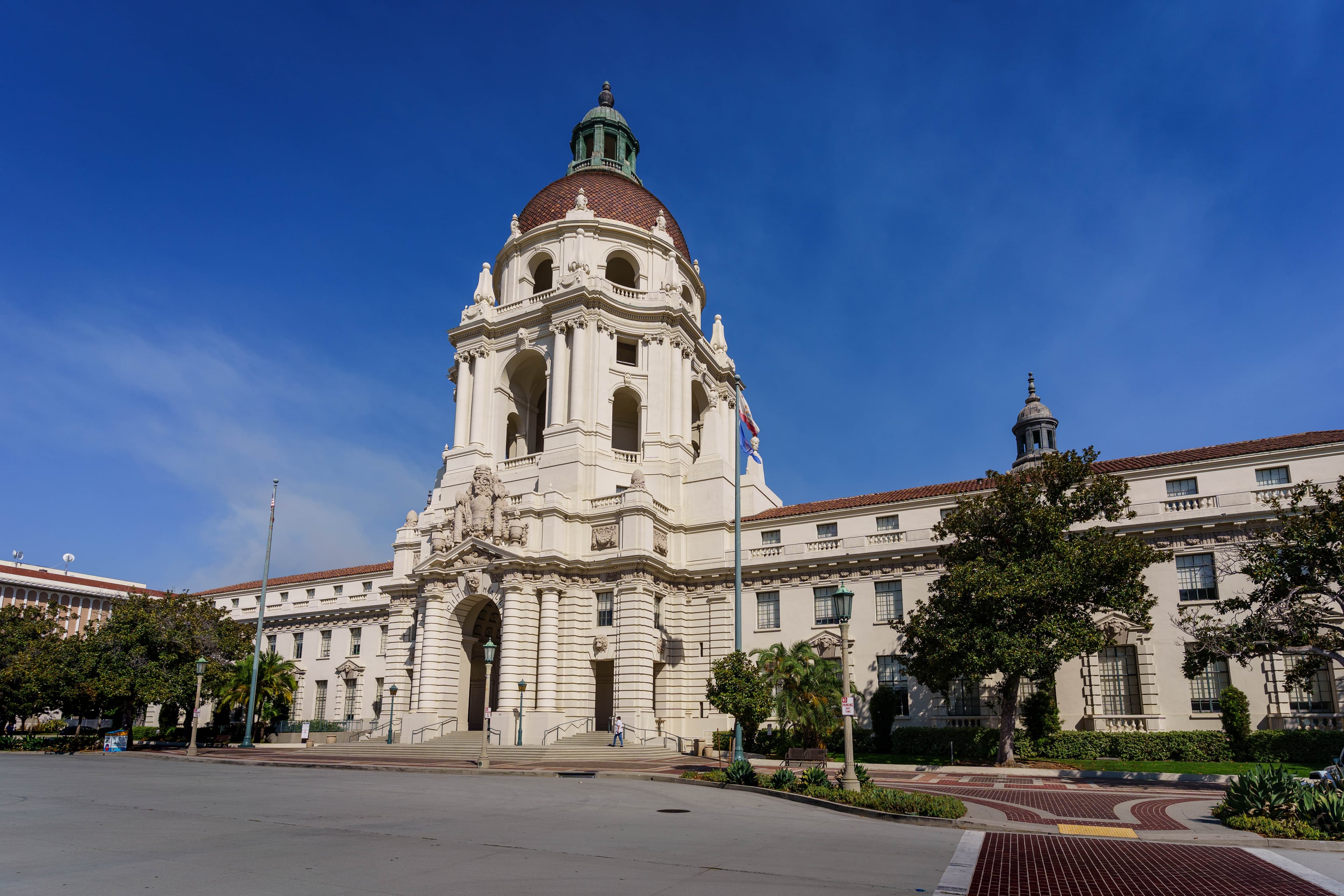
Pasadena, California
Pasadena Real Estate
Craftsman bungalows, historic districts, and the best light in LA County.
Pasadena is the city most people picture when they picture the San Gabriel Valley. Tree-lined streets, historic Craftsman bungalows, the Rose Parade every New Year’s morning, Caltech in the middle of town and JPL just up the road, and the San Gabriel Mountains rising behind almost every view — it’s all here, and it all holds together better than a city of 138,000 has any right to.
For buyers, Pasadena is one of the few places in Los Angeles County where you can still find an architect-designed Craftsman on a walkable block a short drive from downtown LA. For sellers, it’s a market where pricing is hyperlocal: a home in Bungalow Heaven trades on different math than one in Hastings Ranch or Madison Heights, and the right listing strategy makes a real difference. Jennifer works across every Pasadena neighborhood, every week — and she’s the kind of realtor who walks the block before quoting a number.
Homes for Sale in Pasadena
Active Pasadena listings move quickly and often don’t make it to public search portals in the windows that matter. If you’re searching seriously, reach out directly — Jennifer can send you current inventory, upcoming listings, and off-market opportunities matched to your criteria.
About Pasadena Real Estate
Pasadena’s housing market is shaped by three things: history, geography, and institutions. The city’s oldest neighborhoods — Bungalow Heaven, Garfield Heights, parts of Madison Heights, and stretches of the West Pasadena hills — contain some of the most important early-20th-century architecture in the country. That history shows up in pricing and in the rules that govern what you can do with a home. Several Pasadena neighborhoods carry landmark status, and homes within them are often eligible for the Mills Act, a California preservation program that can significantly reduce property taxes in exchange for a commitment to maintain the home’s historic character.
Geographically, the city is pinned against the San Gabriel Mountains to the north and split by the 210 and 134 freeways. The west side of town — San Rafael, Linda Vista, the Arroyo — is hillier, more private, and home to some of Pasadena’s largest estate-scale properties. The east side has more gridded, flatter neighborhoods, the Hastings Ranch loop, and easier access to Sierra Madre and the 210 commuter corridor. Central Pasadena — Old Town, Playhouse District, South Lake — anchors the walkable, mixed-use core.
Institutions matter here in a way they don’t in most LA cities. Caltech, JPL, Huntington Hospital, Art Center College of Design, Fuller Seminary, and a handful of private schools all pull steady demand into the market. Academic calendars shape when homes sell. Summer move-ins are common for faculty, researchers, and families rotating for school years. That’s a detail many generalist realtors miss, and it meaningfully affects listing timing.
Price ranges span one of the widest bands in the SGV. Entry-level condos in the Playhouse District and South Lake area can trade well under $1M, while historic estates in Oak Knoll, San Rafael, and Prospect Park regularly change hands north of $5M. Craftsman bungalows in the $1.2M–$2.5M range are the bread and butter of the market, and they move quickly when priced correctly.
Pasadena rewards buyers who know the difference between one side of a street and the other, and it rewards sellers who work with a realtor willing to explain the market honestly. That’s the kind of representation Jennifer offers.
Living in Pasadena
Pasadena is a real city. You can actually walk places here. Old Town is the obvious example — restaurants, independent bookstores, bars, movie theaters, the Laemmle Playhouse 7 — but the Playhouse District, South Lake, and the growing Del Mar and Playhouse North corridors are all walkable, browsable, and genuinely lived-in.
Weekends tend to revolve around the outdoors. Eaton Canyon’s trailhead sits right at the edge of the city, with a waterfall hike locals do on repeat. The Arroyo Seco, which runs along the west side of Pasadena, hosts the Rose Bowl, the Rose Bowl Aquatics Center, Brookside Park, and an informal trail network where residents jog, cycle, and walk their dogs at dawn. The Huntington Library, Art Museum, and Botanical Gardens — technically in neighboring San Marino — is an afternoon most Pasadena families spend at least a few times a year.
Culturally, Pasadena is dense with options. The Norton Simon Museum holds a world-class collection of European and Asian art. The Pasadena Playhouse has been producing live theater since 1917. The Rose Parade and Rose Bowl put Pasadena on global television every New Year’s morning, and the Rose Bowl Flea Market — the second Sunday of every month — is a destination event in its own right.
Food is strong and getting stronger. Pasadena’s dining scene has grown far past the chain-restaurant reputation of the 1990s. You’ll find serious ramen, Korean barbecue, regional Mexican, a handful of tasting-menu restaurants in the Playhouse and Old Town, great pizza, and a growing independent coffee scene. And Arcadia’s Chinese food is ten minutes away, which effectively makes it part of Pasadena’s eating radius.
Day to day, Pasadena feels older than most of LA — in the best sense. Porches are used. Neighbors know each other. Kids ride bikes. The mountains are right there.
Homes and Architecture in Pasadena
Pasadena’s architectural story is one of the richest in California. The city’s golden era of residential building ran from roughly 1895 to 1930, and the homes from that period define much of what makes Pasadena, Pasadena.
The Craftsman bungalow is the signature style. Pasadena was home to Charles and Henry Greene — the Greene & Greene brothers — whose Gamble House is now a National Historic Landmark and a working museum. Beyond the Gamble House, hundreds of architect-designed and speculative Craftsmans still stand, particularly in Bungalow Heaven, a landmark district of more than 800 Craftsman homes east of Lake Avenue. Garfield Heights, parts of Madison Heights, and North Raymond all contain clusters of original Craftsmans as well.
Spanish Colonial Revival and Mediterranean homes arrived in the 1920s, and they dominate large stretches of South Pasadena, parts of Hastings Ranch, and most of the city’s historic estate neighborhoods. Oak Knoll, Prospect Park, and the west side hills have some of the most remarkable examples, often on deep lots with mature landscaping.
Mid-century ranch homes fill the flats of East Pasadena, Hastings Ranch, and parts of Upper Hastings, built through the 1950s and ’60s as the city expanded. These tend to be the most accessible entry points into single-family ownership in Pasadena today.
Tudor and English Revival homes, Victorian cottages, Dutch Colonials, and a growing set of thoughtful contemporary rebuilds round out the mix. Historic districts — Bungalow Heaven, Prospect Park, Garfield Heights, and others — carry design review requirements, and many eligible homes participate in the Mills Act, which can meaningfully reduce annual property taxes in exchange for preservation commitments.
If architectural history matters to you, Pasadena is one of the few cities in Southern California where it’s still possible to own a piece of it.
Schools in Pasadena
Pasadena Unified School District (PUSD) covers Pasadena, Altadena, and Sierra Madre. It’s a large, diverse district with a mix of well-regarded magnet schools, neighborhood schools, and specialized programs. Buyers who prioritize public schools tend to research attendance zones carefully — some neighborhoods feed into highly sought-after magnets or dual-language programs, and those attendance lines can meaningfully affect resale value.
Private schools are a huge part of Pasadena’s education landscape. Polytechnic School and Chandler School are among the most established K–12 and K–8 private schools in Southern California. Mayfield Senior School, Mayfield Junior School, Westridge School (for girls), Waverly School, and Sequoyah School all serve Pasadena families. Nearby private options include Flintridge Preparatory and Flintridge Sacred Heart in La Cañada Flintridge.
Higher education is everywhere. Caltech and Pasadena City College are major institutions inside the city limits, and Art Center College of Design and Fuller Seminary round out the list. That academic density is part of why Pasadena housing demand is so consistent — there’s always a steady stream of faculty, staff, graduate students, and researchers looking for a home close to campus.
If schools are driving your Pasadena search — public, private, or a mix of both — Jennifer can walk you through the specific attendance zones, wait-list dynamics, and neighborhood patterns that matter for your family.
Frequently Asked Questions About Pasadena Real Estate
What's the average price of a home in Pasadena?
Prices range widely — from entry-level condos under $800K in the Playhouse District and South Lake area to historic estates over $5M in Oak Knoll, San Rafael, and Prospect Park. Single-family Craftsman bungalows in desirable neighborhoods typically trade in the $1.2M–$2.5M range.
What are Pasadena's best neighborhoods?
There's no single answer — Pasadena rewards specific goals. Buyers prioritizing architectural history often look in Bungalow Heaven, Prospect Park, Oak Knoll, or Madison Heights. Families prioritizing walkability and shopping tend toward Playhouse District, South Lake, or Madison Heights. Those wanting larger lots and more privacy look at San Rafael, Linda Vista, or Hastings Ranch. Jennifer can help you map your priorities to the right neighborhoods.
Is Pasadena a good place to raise a family?
Yes. The combination of walkable neighborhoods, public and private school options, parks, libraries, the Kidspace Children's Museum, and year-round outdoor weather makes Pasadena one of the top family destinations in LA County.
Can I still find a Craftsman bungalow in Pasadena?
Yes, though they're competitive. Bungalow Heaven has the densest concentration of original Craftsmans, with additional pockets in Garfield Heights, Madison Heights, and North Raymond. When one comes to market in good original condition, it usually moves fast.
What is the Mills Act and does it apply in Pasadena?
The Mills Act is a California preservation program that allows owners of qualifying historic homes to receive a reduced property tax assessment in exchange for a long-term commitment to maintain the home's historic character. Many Pasadena historic districts contain Mills Act-eligible homes. Jennifer can identify which listings qualify and walk you through the tradeoffs — this is exactly the kind of detail local knowledge matters for.
How competitive is the Pasadena market right now?
Pasadena is consistently one of the more competitive markets in the San Gabriel Valley. Well-priced, well-presented homes in desirable neighborhoods often receive multiple offers, especially in the $1M–$2.5M range.
What's the commute like from Pasadena to downtown LA?
Typically 20–30 minutes to downtown LA, 25–35 minutes to Burbank, and 15–25 minutes to Glendale. The Metro A Line has six stations in or near Pasadena — Del Mar, Memorial Park, Lake, Allen, Sierra Madre Villa, plus Fillmore — making car-free commuting to downtown LA genuinely workable.
How do I get started working with Jennifer on a Pasadena home search?
Fill out the contact form on this page, send her a direct email, or give her a call. She'll follow up personally — usually same day — to talk through your timeline, neighborhoods, and priorities.
Explore Nearby Cities

Work with a Pasadena specialist
Jennifer Lang — Realtor | The Dillsaver Group | Berkshire Hathaway Home Services. If you’re buying, selling, or just thinking about your options in Pasadena, reach out directly. Jennifer follows up personally, usually the same day.